
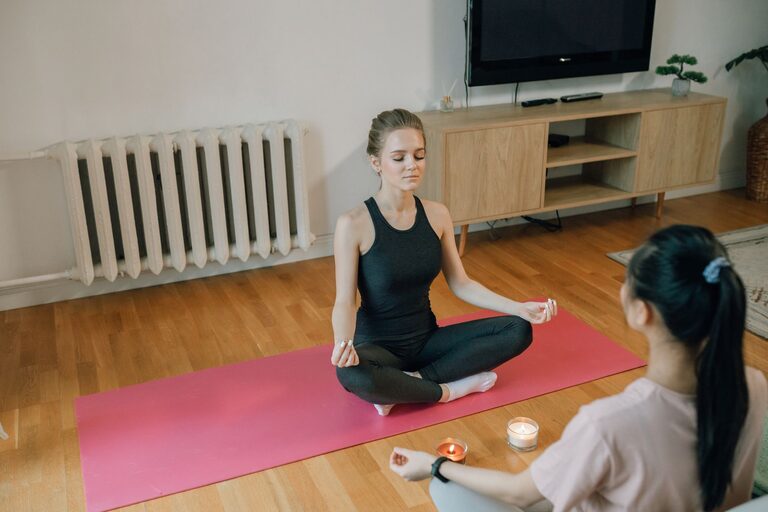
Mindful breathing breaks are simple pauses that bring your attention back to the present moment. You do not need special equipment, a quiet retreat, or a large block of free time. A few intentional breaths can be enough to create a clear transition between tasks.
For beginners, the goal is not to breathe perfectly or empty your mind. Instead, mindful breathing means noticing your breathing as it naturally happens and gently returning your attention when it wanders. With regular practice, these short pauses can become an easy part of your daily routine.
What Is a Mindful Breathing Break?
A mindful breathing break is a brief period when you pause to observe your breath. You may notice the movement of your chest, the feeling of air near your nose, or the rise and fall of your abdomen.
The practice can last anywhere from 30 seconds to several minutes. During that time, try to:
– Pause what you are doing
– Notice your current breathing pattern
– Relax your shoulders and jaw if they feel tense
– Return your attention to the breath when your mind wanders
– Resume your activity at a comfortable pace
There is no need to change your breathing right away. Simply observing it is a useful starting point.
Start With One Minute
Many people make mindfulness harder by setting a large goal at the beginning. A one-minute breathing break is often more approachable than a 20-minute session.
Try this simple practice:
- Sit, stand, or rest in a comfortable position.
- Let your hands settle naturally.
- Notice where you feel your breath most clearly.
- Follow one complete inhale and one complete exhale.
- Continue for about one minute.
- Open your attention to the room and return to your activity.
If one minute feels too long, begin with three slow, natural breaths. The purpose is to build a repeatable habit, not to reach a particular performance target.
Choose a Comfortable Position
You can practice mindful breathing almost anywhere. Choose a position that allows you to stay alert and at ease.
When sitting, place both feet on the floor if that feels comfortable. Let your spine be naturally upright without forcing it straight. You can rest your hands on your lap or by your sides.
You may also practice while:
– Standing at a desk
– Sitting in a parked car
– Waiting for a meeting to begin
– Taking a quiet break at home
– Walking slowly through a familiar space
Comfort matters more than form. If you feel uncomfortable, adjust your posture or stop the practice.
Let Your Breathing Stay Natural
Beginners often assume they must take very deep breaths. In many cases, it is easier to begin by observing your natural breathing rather than trying to control it.
Notice simple details:
– Is the breath smooth or uneven?
– Does the inhale feel shorter or longer than the exhale?
– Where does your body move as you breathe?
– Does the air feel warm or cool?
– Does your breathing change as you pay attention?
There are no correct answers. Your breathing may change from one moment to the next. Your job is simply to notice without judging.
If you choose to make your exhale a little longer, do so gently and comfortably. Avoid forcing the breath or holding it if that feels unpleasant.
Use a Simple Attention Anchor
An anchor is a steady point that helps you return to the present. The breath is one common anchor, but you can focus on a particular part of the breathing experience.
For example, choose one of these:
– The feeling of air passing through your nose
– The movement of your ribs
– The rise and fall of your abdomen
– The sound of each breath
– The feeling of your feet on the floor
When thoughts appear, acknowledge them and return to your chosen anchor. You do not need to argue with your thoughts or push them away. A simple phrase such as “thinking” or “back to the breath” can help you redirect your attention.
Expect Your Mind to Wander
A wandering mind is a normal part of the practice. You may think about work, errands, conversations, or plans for later. This does not mean you are doing the exercise incorrectly.
Each time you notice that your attention has drifted, you have a chance to practice returning. Try these steps:
- Notice that your attention has moved away.
- Avoid criticizing yourself.
- Identify one breath.
- Continue from that point.
The return is just as important as the original focus. Over time, this gentle process can make the practice feel more familiar.
Connect Breaks to Daily Activities
A routine is easier to remember when it is connected to something you already do. Choose a regular moment and add a short breathing pause.
Good opportunities may include:
– Before opening your email
– After finishing a phone call
– Before starting a meal
– When you arrive home
– After washing your hands
– Before beginning a new task
– During a scheduled afternoon break
You can also use transitions as reminders. For example, take three mindful breaths whenever you move from one room to another or switch from one activity to the next.
Try the Three Breath Reset
The three-breath reset is a quick option for busy days.
First breath: Arrive
Notice that you have paused. Feel your feet, seat, or hands, and observe the breath without trying to change it.
Second breath: Notice
Pay attention to one detail, such as the movement of your abdomen or the feeling of air at your nose.
Third breath: Choose
Ask yourself what you want to bring to the next moment. You might choose patience, care, focus, or simply a steady pace.
Then return to your activity. This practice takes less than a minute and can fit into many schedules.
Make the Practice Easy to Repeat
Small adjustments can make mindful breathing breaks more consistent. Consider the following tips:
– Set a gentle reminder on your phone or computer.
– Keep the first sessions short.
– Practice at the same time each day.
– Place a small visual reminder near your workspace.
– Track your practice with a simple checkmark.
– Invite a friend or coworker to take a quiet pause with you.
– Focus on consistency rather than length.
If you miss a day, begin again at the next available opportunity. There is no need to start over or make up for missed practice.
Keep the Practice Comfortable
Mindful breathing should feel manageable. If focusing on your breath makes you uncomfortable, shift your attention to another neutral experience, such as the feeling of your feet on the floor, sounds in the room, or the movement of your hands.
Avoid forcing deep breaths, holding your breath for long periods, or treating the exercise as a test. You can pause whenever you wish. If you have concerns about breathing or feel unwell, stop and return to your usual routine.
Build a Personal Breathing Habit
The best mindful breathing break is one you are willing to repeat. Start with a small goal, such as three breaths once a day. As the practice becomes familiar, you can add another break or extend the pause by a minute.
What matters most is the quality of your attention, not the amount of time. A brief pause can remind you to slow down, notice the present moment, and approach your next task with greater intention. With simple, comfortable practice, mindful breathing can become a natural part of your everyday routine.